
Vietnam’s building-material market combines strong demand from housing, hospitality, industrial and infrastructure projects with cautious procurement, volatile input costs and a higher threshold for technical evidence. Developers increasingly compare lifecycle value, energy performance and delivery responsibility—not price alone.
FOUNDING 10 / 09
INDUSTRY PERSPECTIVE
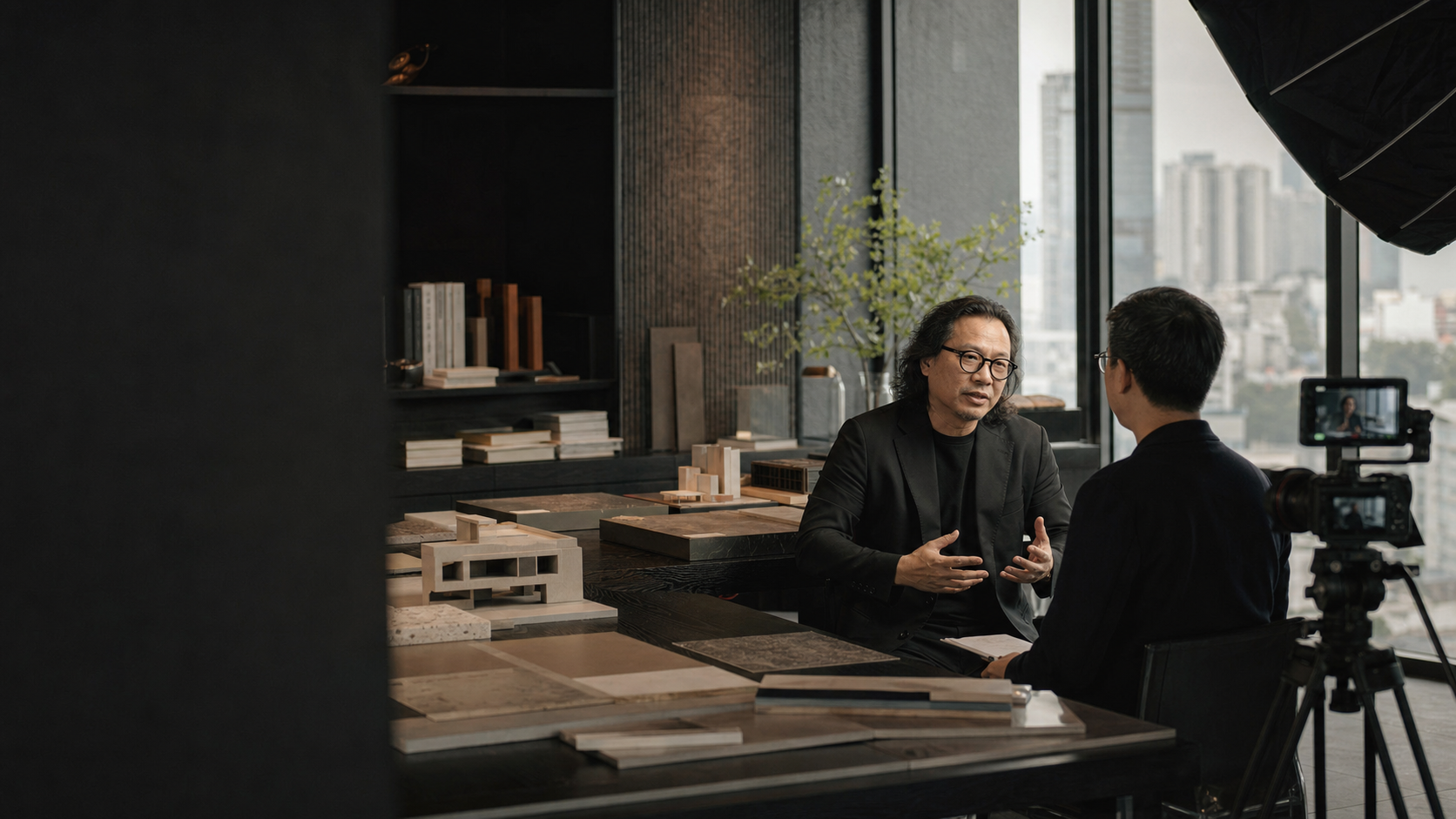
Tran Khanh Trung
Co-Founder; Chairman & Chief Architect, TTT Architects
TTT Architects / TTT Corporation
Architecture, interiors & fit-out
Green design must survive contact with construction.
A focused industry perspective on thirty years of design-build knowledge, sustainable interiors and the productive tension between creative intent and delivery reality.
A market moving from price
toward proof.
The next phase will favour products with energy labels, carbon and material data, climate-tested performance, traceable quality control and a credible Vietnam after-sales system. Green materials are moving from optional positioning toward a measurable procurement requirement.
Hospitality and premium interiors need engineered wood, hardware, acoustic products, lighting and surfaces with strong buildability.
Design intent often degrades between approved sample, shop drawing and mass production.
Two issues worth
working through.
Sample to mass production
Freeze a signed master sample, approve the first production article and inspect before shipment.
Fire and acoustic assemblies
Document the complete installed build-up—including substrate, joints, fixing and penetrations—not only the visible finish.
Work, role and contribution.
TTT states it was founded in 1992 and works across architecture, construction and interior decoration.
TTT identifies Tran Khanh Trung as Co-Founder and Chairman cum Chief Architect of TTT Architects.
Its public content connects his work with green architecture and net-zero discussion.
Design-build integration
Green interiors
Hospitality delivery
Material responsibility
Questions designed
to reveal the work.
What changes when designers understand construction?
Ideas become more precise. The designer can anticipate interfaces, sequencing, tolerances and the real cost of a gesture without giving up ambition.
What is commonly misunderstood about green interiors?
A green label is not enough. Material origin, durability, replacement cycles, indoor health and operational behaviour all matter.
What should suppliers bring to the design table?
Samples are the beginning. Designers also need tested performance, installation logic, alternatives and confidence that the delivered batch will match the approved intent.
Can sustainability still feel emotional?
It should. Responsible design succeeds when people want to inhabit and care for it, not when performance is visible only in a certificate.